



Ghana’s real estate market is entering 2026 with unprecedented momentum, presenting compelling opportunities for both buyers and investors. As the country continues its trajectory of economic growth and urban transformation, understanding the emerging trends in this dynamic market has never been more critical. This comprehensive analysis explores the key developments shaping Ghana’s property landscape and what they mean for stakeholders.
Economic Foundations Driving Market Growth
Ghana’s economy is projected to grow at 5-6% annually through 2025-2026, with GDP growth rates stabilizing around 5.8%. This economic expansion is translating directly into the real estate sector, with market analysts projecting that property prices in Accra will maintain an annual growth rate of 5-8% through 2026, with prime neighbourhoods potentially experiencing double-digit annual growth.
The real estate sector’s resilience is particularly noteworthy given the broader economic challenges. Prime locations such as Accra have seen property values rise by 20-25% since 2020, while urban apartments have experienced appreciation rates between 40 and 49 percent. This performance significantly outpaces inflation, making real estate a powerful wealth preservation tool.
1. The Affordable Housing Revolution
Perhaps the most significant trend reshaping Ghana’s real estate landscape in 2026 is the intensified focus on affordable housing. Ghana’s housing deficit stands at approximately 1.8 million units, with the government planning to utilize public-private partnerships to develop 250,000 housing units annually through to 2030.
The government’s “My Home, My Peace” program represents a cornerstone initiative in addressing this shortage. This revised National Affordable Housing Program aims to reduce the cost of developing housing units by as much as 40%, with prices pegged between $13,220 for a studio to $42,550 for a three-bedroom unit. For investors, this sector offers an opportunity to generate stable, long-term returns while contributing to national development.
The demand fundamentals are compelling. With Ghana’s population projected to reach 40 million and a rapidly expanding middle class seeking quality housing, the affordable housing segment presents exceptional investment potential. Developers focusing on this space are finding strong demand, particularly in emerging suburban areas around major cities.
2. Diaspora Investment Surge
The Ghanaian diaspora is emerging as a transformative force in the real estate market. The Ghanaian real estate market demonstrates stability, with property appreciation averaging 5-7 percent annually, and this stability, coupled with high remittance inflows, supports a positive long-term investment outlook.
In 2023, Ghana received $4.6 billion in remittances, with a significant portion channeled into property investments. The government’s Diaspora Engagement Policy has created a more welcoming environment for these investments, simplifying processes and providing official support structures.
For diaspora investors, the appeal extends beyond financial returns. Real estate remains one of the most secure and impactful avenues for diaspora investment, with property ownership not only strengthening families but also contributing significantly to national development. Recent initiatives, including property expos in London and Washington DC, have further facilitated diaspora engagement with Ghana’s property market.
However, diaspora investors must navigate specific considerations. While the Right of Abode offers convenience, pursuing full Ghanaian citizenship provides access to longer lease terms and favorable tax treatment, maximizing long-term investment value.
3. Smart Home Technology Integration
Technology is revolutionizing Ghana’s real estate sector, with smart home features transitioning from luxury amenities to expected standards. Urban centers like Accra and Kumasi are experiencing a gradual shift towards smart home adoption, driven by the demand for convenience, security, and energy efficiency.
The practical benefits are driving adoption: with frequent power fluctuations and high electricity costs, many homeowners are seeking energy-saving solutions such as smart lighting and automated power management systems, while rising home security concerns have led to increased demand for smart security systems, including surveillance cameras, motion detectors, and automated locks.
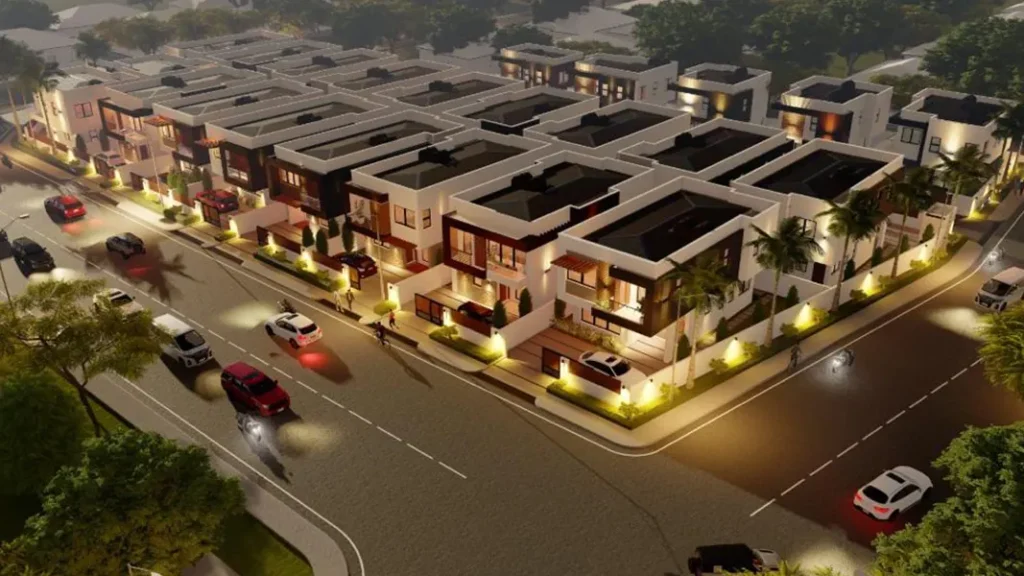
Leading developers like Blackrock Developers Ltd, are integrating these technologies into new projects. Properties equipped with IoT devices, automated systems, and energy management solutions command premium prices and attract tech-savvy buyers. For investors, properties with smart features offer higher rental yields and stronger appreciation potential.
The trend extends to entire developments, with gated communities featuring EV charging stations, smart waste management systems, and renewable energy infrastructure setting new standards for residential living. Early adopters stand to benefit as these features become increasingly demanded by buyers.
4. Mixed-Use Development Boom
Modern Ghanaians increasingly seek integrated living environments that seamlessly combine residential, commercial, and recreational spaces. This demand is fueling a surge in mixed-use developments across major cities.
These projects offer multiple advantages: convenience through walkability, diverse revenue streams for investors, and resilience against market fluctuations. Areas around major transportation hubs and economic zones are particularly attractive for such developments, benefiting from government infrastructure investments.
For investors, mixed-use properties provide portfolio diversification within a single asset, combining residential rental income, commercial leasing revenue, and potential retail earnings. This diversification reduces risk while maximizing returns.
5. Emerging Suburban Opportunities
As urban cores become increasingly expensive, emerging suburban areas present exceptional value propositions. Locations like Oyarifa in Greater Accra Region offer properties at 40-50% less than Accra proper while benefiting from improved road networks and proximity to the capital, while Ejisu near Kumasi offers family homes at 30% lower prices than prime Kumasi locations, with new schools and shopping centers enhancing appeal.
These emerging areas are benefiting from major infrastructure developments. The expansion of road networks, improved utilities, and development of commercial centers are transforming formerly peripheral locations into vibrant communities. Early investors in these areas stand to benefit from significant appreciation as development progresses.
6. Sustainable and Green Building Practices
Environmental consciousness is reshaping development practices across Ghana. Developers are increasingly incorporating sustainable features such as solar panels, water conservation systems, and eco-friendly materials into projects.
As enrollments at tertiary institutions swell, with the number of students in higher education projected to rise by 25% over the next five years, demand for purpose-built student accommodations is soaring. Green building practices are particularly attractive to this demographic, who prioritize sustainability and lower operating costs.
Beyond residential properties, green certification programs are gaining traction in commercial developments, signaling a shift toward environmentally responsible building practices that can command premium rents and valuations.
7. Infrastructure-Driven Growth
Government infrastructure investments are creating new real estate hotspots across Ghana. The 2026 Budget includes GH¢30.0 billion allocated for the Big Push Infrastructure Program for strategic roads and bridges, plus GH¢3.0 billion for the Ghana Road Maintenance Trust Fund to construct roads in constituencies.
Major projects like the Accra-Tema Motorway expansion, railway developments, and airport improvements are enhancing connectivity and unlocking value in surrounding areas. Properties near these infrastructure nodes are experiencing accelerated appreciation, presenting strategic opportunities for investors who can identify areas positioned to benefit from upcoming developments.
The infrastructure push extends beyond transportation. Investments in education and healthcare facilities are creating demand for supporting real estate, including staff housing, commercial services, and mixed-use developments around these institutions.
8. Commercial Real Estate Evolution
The demand for office spaces, retail outlets, and industrial properties is expected to surge, driven by Ghana’s thriving business environment, with experts predicting a 12% growth in commercial property investments, particularly in strategic locations near major transportation hubs and economic zones.
The commercial segment is evolving beyond traditional office space. Co-working facilities are gaining popularity as startups and international companies seek flexible workspace solutions. Retail is transforming with the development of modern shopping centers in secondary cities as the middle class expands beyond Accra.
Industrial and logistics properties are particularly promising, driven by Ghana’s position as a regional trade hub and growth in e-commerce. Properties near ports and major highways are commanding premium valuations.
9. Regional Market Expansion
While Accra continues to dominate Ghana’s real estate market, secondary cities are emerging as attractive investment destinations. Kumasi has witnessed substantial growth in its real estate sector, while Takoradi has seen a surge in development due to its thriving oil and gas industry.
In 2025, housing demand in Kumasi is projected to grow by 8% due to urbanization. These regional markets offer lower entry costs, higher yields, and significant appreciation potential as development spreads beyond the capital.
10. Digital Transformation of Transactions
Technology is streamlining property transactions and marketing. Virtual property tours, online mortgage applications, and digital platforms are making real estate more accessible to both local and international buyers. This digitalization is particularly beneficial for diaspora investors who can now evaluate and purchase properties remotely with greater confidence.
Blockchain technology and digital land registries are beginning to address traditional challenges around land ownership verification, improving transparency and reducing transaction friction.
Key Considerations for Investors in 2026
Market Timing and Interest Rates
Market analysts anticipate interest rate cuts in late 2025 as inflation moderates from its 21.2% level, and this expected easing could unleash pent-up demand and accelerate price growth in 2026. Investors with available capital may find current prices attractive before this anticipated acceleration.
Due Diligence Essentials
Success in Ghana’s real estate market requires thorough due diligence. Investors should engage specialized lawyers, secure formal verification from the Lands Commission before any payment, and ensure immediate registration of interests. The Land Act 2020 has improved the legal framework, but careful navigation remains essential.
Location Strategy
Prime areas in Accra such as East Legon, Cantonments, and Airport Residential continue to command premium prices and deliver strong appreciation. However, the highest returns may come from strategic investments in emerging areas benefiting from infrastructure development.
For affordable housing investors, locations with strong demographic growth and improving connectivity offer the best prospects. Secondary cities like Kumasi and Takoradi provide diversification and lower entry costs.
Financing Options
Multiple financing pathways are available to investors. The National Housing and Mortgage Fund works with financial institutions to develop various mortgage products. Pension-backed mortgages are gaining popularity among local financial institutions. International investors should explore both local and international financing options to optimize their capital structure.
Looking Ahead: The 2026 Opportunity
Ghana’s real estate market in 2026 stands at a pivotal moment. The convergence of strong economic fundamentals, government policy support, demographic tailwinds, and increasing investor sophistication creates an environment ripe with opportunity.
For buyers, the market offers diverse options across price points and locations. Whether seeking an affordable starter home, a luxury residence with smart features, or property in emerging suburban areas, options abound for those willing to conduct proper research and due diligence.
For investors, both local and international, Ghana presents a compelling value proposition. Property appreciation consistently outpaces inflation, rental demand remains strong across segments, and government initiatives are creating new opportunities in affordable housing and infrastructure-adjacent developments.
The key to success lies in understanding market dynamics, choosing the right location and property type, conducting thorough due diligence, and partnering with experienced local professionals who can navigate the regulatory landscape and identify genuine opportunities.
Conclusion
Ghana’s real estate market in 2026 is characterized by robust fundamentals, innovative developments, and expanding opportunities across multiple segments. From affordable housing addressing critical social needs to luxury developments incorporating cutting-edge smart home technology, from diaspora-driven demand to infrastructure-unlocked appreciation potential, the market offers something for every type of buyer and investor.
Those who act strategically, leveraging current market conditions while positioning for anticipated developments, stand to benefit significantly from one of Africa’s most dynamic real estate markets. The time to engage with Ghana’s property sector is now, as the country builds not just structures, but a foundation for sustained economic transformation and prosperity.
Success requires more than capital—it demands market knowledge, local expertise, and strategic vision. By understanding these top trends and their implications, buyers and investors can navigate Ghana’s real estate landscape with confidence, making informed decisions that align with their goals while contributing to the nation’s development journey.This article is for informational purposes only and does not constitute financial or investment advice. Prospective investors should conduct their own due diligence and consult with qualified professionals before making investment decisions. Feel free to reach out to us at Blackrock for Free Consultation
