


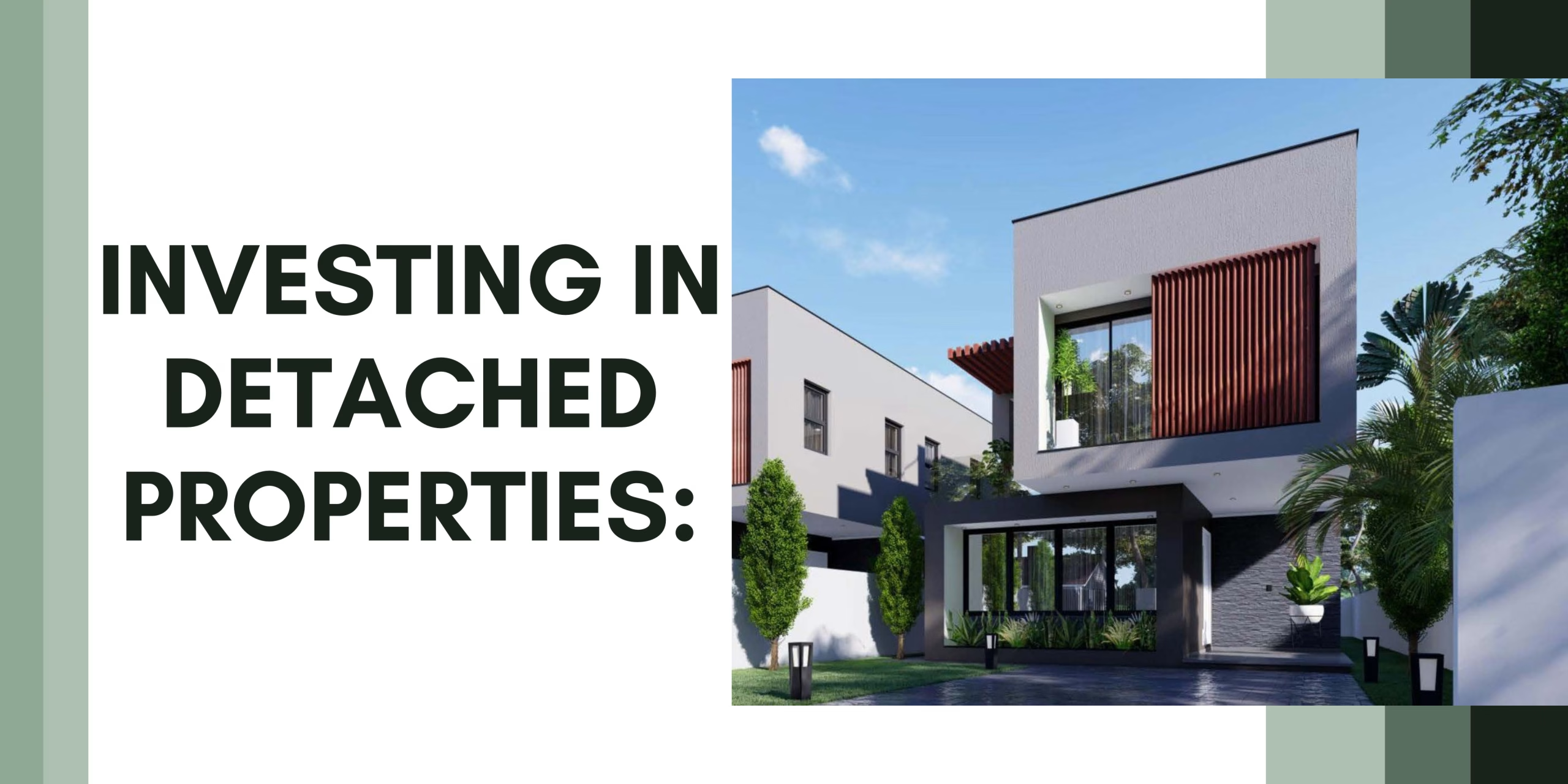
What You Need to Know About Investing in Detached Properties:
Detached homes have always held a special place in the Ghanaian property market. They represent space, privacy, and a certain kind of arrival — but beyond the lifestyle appeal, they are one of the most reliable asset classes available to investors in Greater Accra today. If you are thinking about putting your money into a detached property, this guide will help you understand the opportunity clearly.
Why Detached Properties Hold Their Value
In a city like Accra, where land is finite and demand for quality housing continues to grow, detached properties consistently outperform the broader market over the medium to long term. Here is why:
- Land ownership is the foundation. Unlike apartments or semi-detached units, a detached property gives you outright ownership of the parcel of land beneath it. In Greater Accra, land values have appreciated significantly over the past decade, and that trend shows no sign of reversing.
- Scarcity drives demand. As the city expands and infill development increases, fully detached homes on their own plots become progressively harder to find — especially in well-connected middle to upper-middle income neighbourhoods.
- They attract quality tenants. Families, senior professionals, and returning diaspora — the most reliable rental demographic — consistently prefer detached properties for the space, security, and lifestyle they offer.
- Resale is relatively straightforward. Detached homes have a wide buyer pool. Whether you are selling to an owner-occupier, another investor, or a corporate buyer, you are not limited to a narrow market.
The Rental Case: Numbers Worth Considering
Many investors in Greater Accra choose detached properties as rental assets — and the fundamentals support that decision. Rental yields in established neighbourhoods like Haatso, Adenta, and East Legon Adjacent have remained robust, driven by the steady influx of professionals relocating to the capital and the persistent undersupply of quality homes at the middle-income level.
What makes detached homes particularly attractive as rental investments is the durability of the income. Tenants in this category typically stay longer, maintain the property better, and are less likely to default — especially when the property is located in a safe, well-serviced neighbourhood.
Rental payments in Ghana are commonly collected one to two years in advance, which means as an investor you are often looking at a significant lump sum at the outset of each tenancy — excellent for managing your cash flow or reinvesting into another asset.
What to Look for When Evaluating a Detached Property
Not every detached property is a good investment. Here are the factors that will determine whether your asset appreciates or stagnates over time.
1. Location and Infrastructure Access
The single most important factor in Ghanaian real estate remains the same it has always been: where is it? Proximity to major roads, markets, schools, and employment hubs determines both rental demand and long-term appreciation. Look for developments in areas with active infrastructure investment from the government and the private sector — these signal future value.
2. Developer Track Record
In the Ghanaian market, buying from a reputable developer is not a luxury — it is a necessity. Your investment is only as secure as the organisation building it. Look for evidence of completed projects, clear title documentation, transparent payment structures, and a history of delivering on promises.
3. Build Quality and Practical Design
For long-term rental performance, build quality is everything. Properties that are poorly built will generate ongoing maintenance costs that erode your returns. Equally important is practical design — homes that reflect how Ghanaian families actually live tend to attract and retain tenants more effectively than developments chasing Western aesthetics at the expense of functionality.
4. Title and Legal Documentation
Before any money changes hands, ensure the land title is clean and the development is fully authorised. Work with a qualified lawyer to conduct due diligence on the indenture, site plan, and any encumbrances. This step is non-negotiable.
5. Total Cost of Acquisition
The purchase price is only part of the picture. Factor in stamp duty, legal fees, registration costs, utility connections, and any finishing work required before the property is tenancy-ready. A clear-eyed view of total acquisition cost will protect your projections.
Owner-Occupier vs. Pure Investment: Finding Your Balance
A question many buyers face is whether to occupy the property themselves or treat it as a pure investment. The good news is that detached properties often allow you to do both — either sequentially (occupy now, rent later) or structurally (live in one unit, rent out additional space where applicable).
If you are buying primarily for capital appreciation, consider areas in earlier stages of development where pricing is still accessible. If rental income is your priority, focus on established neighbourhoods with proven rental demand and strong transport links.
Common Mistakes Ghanaian Property Investors Make
- Underestimating holding costs — rates, maintenance, and vacancy periods need to be budgeted for.
- Buying based on aesthetics rather than demand — a beautiful home in a location with weak rental demand is a poor investment.
- Skipping legal due diligence to save on professional fees — this remains one of the most expensive shortcuts in the Ghanaian market.
- Ignoring management — a rental property requires active oversight, whether you manage it yourself or engage a property manager.
- Overleveraging — borrowing aggressively to fund an acquisition exposes you to interest rate risk and cash flow pressure.
The Blackrock Perspective
At Blackrock Developers, we have spent over a decade building homes for the middle to upper-middle income market in Greater Accra. Our focus has always been practical quality — homes that are well-built, thoughtfully designed, and located where real demand exists.
Our current development, The Cove @ Haatso, is designed with both owner-occupiers and investors in mind. Haatso sits within the Ga East Municipal District — one of the fastest-growing corridors in Greater Accra — with easy access to the Accra-Kumasi highway, established schools, and community amenities that families and professionals increasingly value.
If you are evaluating your next property investment, we would be glad to walk you through the specifics — rental projections, acquisition costs, and what makes this development different from others in this price bracket.
Ready to Take the Next Step?
Download our Investor Guide or speak directly with our team.
📥 Download the Investor Guide | 📞 Contact Our Team
www.blackrockdevelopers.com | Accra, Ghana
